Blog · Cruise Travel
How to Book the Best Alaska Cruise for Families
Planning the best Alaska cruise for families? Here’s the exact sequence — ship size, cabin type, timing, and what it costs you to wait.
 By Grant Haynes
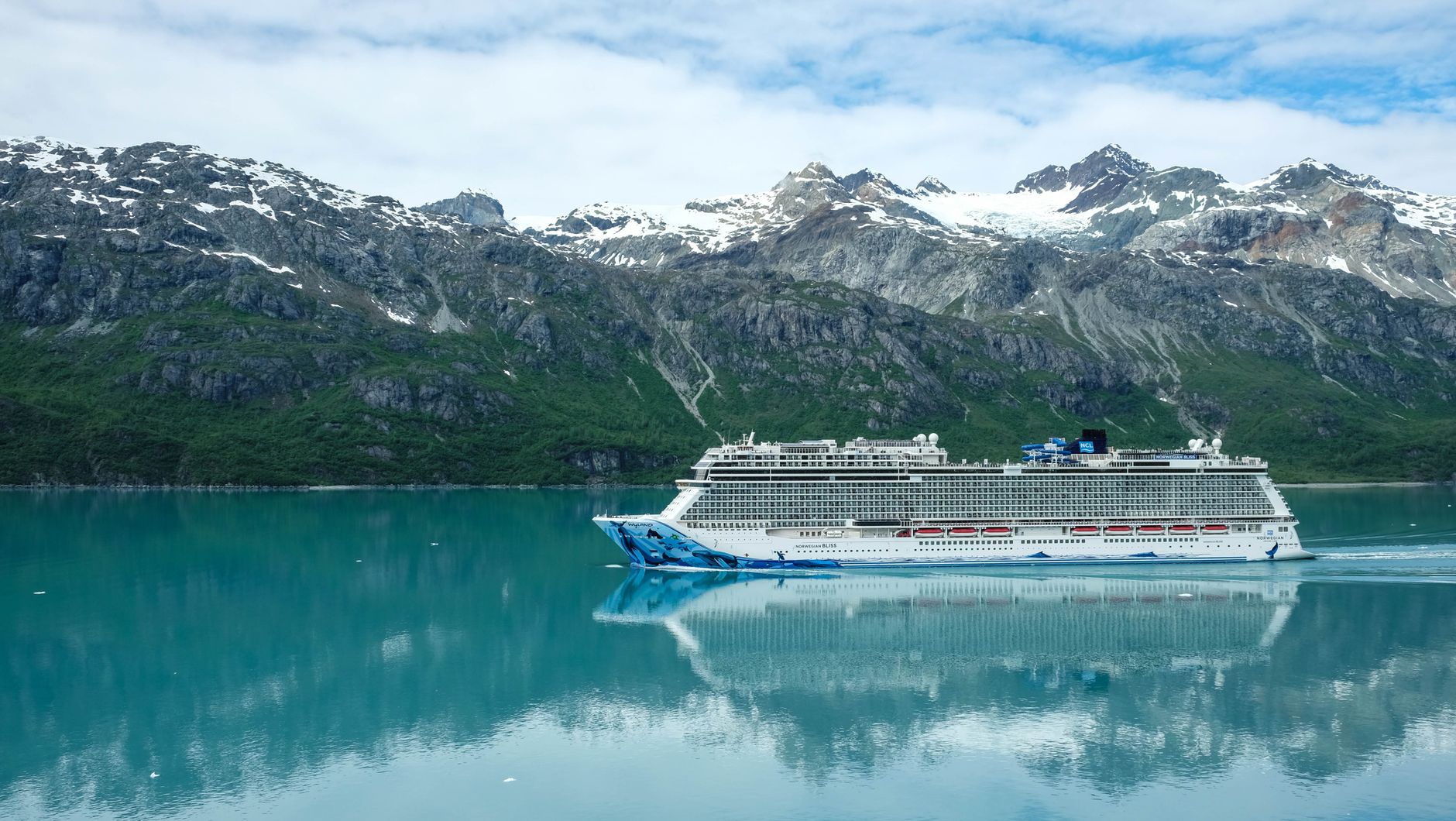
The best Alaska cruise for families is rarely the one with the flashiest marketing — it’s the one booked in the right sequence, before the best cabins and the most useful shore excursions disappear. Alaska is the most seasonally compressed cruise destination in North America: nearly all sailings run May through September, which means the entire demand for the year stacks into a four-month window. Families who treat this like a standard summer vacation booking — where six months out feels early — routinely end up on the wrong deck, in a cabin that sleeps awkwardly, paying more than the travelers who booked eight months ahead of them.
In This Article
Step 1: Decide Ship Size Before Anything Else
Ship size is the single decision that shapes everything else about your Alaska cruise experience, and most families pick it last. Large ships — typically 2,000 passengers and up — offer more onboard amenities: multiple dining options, kids’ clubs, rock walls, and the kind of entertainment that keeps teenagers engaged on sea days. But they’re restricted from sailing into some of Alaska’s most dramatic narrow passages and smaller ports.
Ship size is the single decision that shapes everything else about your Alaska cruise experience, and most families pick it last.
Small and mid-size ships — often under 1,000 passengers — trade the onboard programming for deeper access. They dock closer to town in ports like Juneau and Ketchikan, and some can navigate fjords that larger vessels can’t enter at all. For families with younger children who need the ship itself to be engaging, a larger ship often wins. For families with older kids who want the landscape to be the experience, smaller ships deliver it more completely.
Settle this question first. Every other decision — cabin, itinerary, shore excursions — flows from it. A family that hasn’t decided on ship size can’t meaningfully compare prices or cabins, because they’re not comparing equivalent experiences.
Step 2: Choose Cabin Category — Not Just Price
On an Alaska cruise, the cabin category question isn’t just about budget — it’s about sleep configuration and views. Families almost universally need a cabin that sleeps more than two adults comfortably. The standard interior or ocean-view cabin sleeps two adults and two children on paper, but in practice, the Pullman-style upper bunks and narrow floor space make a week feel long. If your children are past elementary school age, a connecting cabin or a family balcony suite changes the trip meaningfully.
The balcony argument is also different on an Alaska cruise than on a Caribbean sailing. In the Caribbean, a balcony is a nice-to-have. In Alaska, when the ship enters the Inside Passage at dawn and there are humpback whales surfacing 200 feet from your railing, the balcony is the experience. Families who book interior cabins to save money often report this as their primary regret — not because of the room itself, but because they missed sightings that happened while they were asleep or crowded at a public deck railing.
According to the CDC’s Vessel Sanitation Program, cruise ships must publicly report health and inspection data — a useful but underused resource when families are narrowing down which ships to compare. Checking a ship’s inspection history takes five minutes and occasionally surfaces meaningful differences between vessels of similar size and price.
Seven mornings. Five minutes each. Take it with you.
A short devotional for the week you’re away — one reading per morning, a question worth sitting with, and something small to do. Take it on any trip.
SEND ME THE DEVOTIONALStep 3: Know Your Booking Window
For summer Alaska sailings, the practical booking window opens 18 to 24 months before departure. That isn’t marketing language — it reflects when the best cabin categories at introductory pricing actually become available. Cruise lines release Alaska inventory in the fall for the following summer, and the categories with the most demand — balcony cabins with good midship placement, connecting staterooms, and full suites — are first to fill and first to reprice.
Twelve months out is still workable, but you’ll start making concessions: forward or aft cabin placement instead of midship, fewer connecting options, or a higher fare for the same category a traveler paid less for six months earlier. At eight months out, the concessions compound. At six months, you’re looking at whatever remains — and on a compressed season like Alaska’s, "whatever remains" is not a planning strategy.
The practical rule: if you’re reading this in fall or winter, Alaska next summer is the target. If you’re reading this in spring, you’re planning for the following year and that’s the right posture.
Step 4: Lock Shore Excursions Early
Alaska’s most popular family excursions — whale watching in Juneau, the White Pass rail journey in Skagway, helicopter glacier landings — book out months before the ship departs. These aren’t last-minute add-ons. For a family, the shore excursion lineup often determines whether the destination actually delivers on what the brochure promised.
Book excursions through your travel advisor rather than exclusively through the cruise line. Third-party operators in ports like Juneau and Ketchikan frequently offer the same or better experiences at lower prices, with guarantees that cover you if the ship’s departure is delayed. Your advisor can vet these operators and build them into your overall itinerary before you board — not while you’re standing on a dock with thirty minutes to decide.
Families who connect through the cruise travel planning process early often find that shore excursion selection is where the advisory relationship pays for itself most visibly — not in the booking, but in the judgment calls made before the ship leaves port.
What Changes If You Wait
The honest answer: almost everything. Cabin categories become unavailable or reprice upward. Shore excursions close. Connecting cabins — scarce to begin with — disappear entirely. And the planning itself becomes reactive rather than intentional, which is the opposite of how a family trip of this scale should feel.
There’s also a less obvious cost to waiting: when you’re choosing from what’s left, you make decisions you wouldn’t otherwise make. You book a cabin you’re not sure about. You skip an excursion because the preferred one is full. The trip is still fine — but it’s a narrower version of what it could have been.
One thing that doesn’t change if you wait: the commission structure built into your cruise booking. Every cruise fare, regardless of when or where you book it, includes a supplier commission. Booking through StewardTravel.com means a portion of that commission can be redirected to your church, missionary, or nonprofit through the Gratitude Giving Program — at no extra cost to you. The price is the same. The impact isn’t.
Proverbs 21:5 puts it plainly enough: "The plans of the diligent lead surely to abundance, but everyone who is hasty comes only to poverty." It applies to Alaska cruise bookings more literally than you might expect.
Ready to start planning? Contact Grant Haynes at StewardTravel.com for a free, no-pressure conversation about where you want to go and how we can make it happen. Call 770-609-7451 or email info@stewardtravel.com.
- alaska cruise
- family cruise planning
- cruise travel tips
- alaska inside passage