Blog · Cruise Travel
Ocean Cruise vs River Cruise: Which One Is Right for You?
Ocean cruise vs river cruise — the tradeoffs go deeper than ship size. Here’s what experienced travelers wish they’d known before choosing between the two.
 By Grant Haynes
The ocean cruise vs river cruise conversation is one of the most genuinely useful planning questions a traveler can ask — and one of the most commonly answered with the wrong framework. Most comparisons lead with ship size or price. Neither of those is the deciding factor. What actually determines which experience fits you is something far more specific: how much time you want to spend inside a destination versus how many destinations you want to move through.
In This Article
How Ocean and River Cruises Actually Differ
Ocean cruising is built for breadth. A Caribbean itinerary might touch four or five islands in seven days, giving you a morning or afternoon in each port before returning to a ship that is, genuinely, the destination between stops. The ship carries anywhere from 2,000 to 7,000 passengers, offers multiple dining venues, entertainment, pools, and enough onboard activity that some guests barely leave.
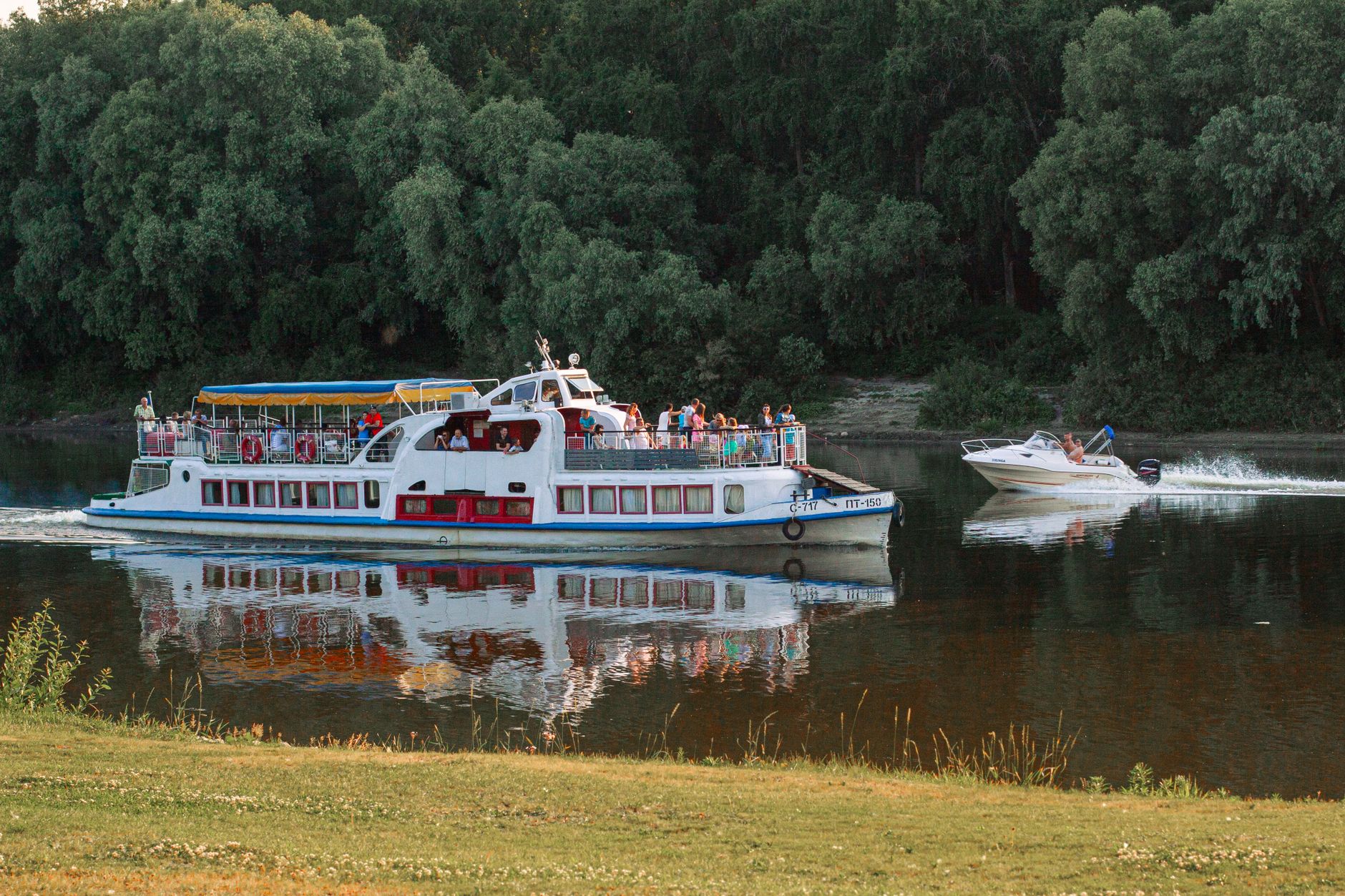
River cruising is built for depth. A typical European river cruise carries 100 to 200 passengers on a vessel roughly the length of two city buses. Itineraries move slowly — sometimes only a few dozen miles overnight — and dock in the center of towns rather than at industrial port facilities. You can walk off the ship and be standing in a medieval square within minutes.
River cruise itineraries are built around the destination, not around the ship. That’s a structural difference, not a marketing claim, and it changes everything about how the days feel.
River cruise itineraries are built around the destination, not around the ship.
The Port Depth Question Nobody Asks Early Enough
On a large ocean cruise, port time is often five to eight hours. In a place like Grand Cayman, that is enough to get into the water, grab a meal, and see something meaningful — if you move intentionally. But the ship’s schedule is non-negotiable. If you are twenty minutes late returning to the tender or gangway, the ship does not wait.
That time pressure shapes the entire day. Shore excursions are engineered to fit the window. Independent exploration requires disciplined watch-checking. It’s manageable, and experienced ocean cruisers learn to work it naturally — but it is a real constraint that first-timers often underestimate.
River cruise passengers, by contrast, sometimes sleep while the ship moves to the next town. They wake up docked somewhere new, with the entire day ashore if they want it. That is a fundamentally different relationship with a place. You can linger over lunch, duck into a church, walk back to the ship, and go out again. The destination is not a timed excursion; it is the environment you are living in for two or three days at a stretch.
Seven mornings. Five minutes each. Take it with you.
A short devotional for the week you’re away — one reading per morning, a question worth sitting with, and something small to do. Take it on any trip.
SEND ME THE DEVOTIONALThe Tradeoff Most Travelers Don’t Anticipate
Here is the specific tradeoff that experienced travelers consistently flag — and that almost never appears in cruise comparison articles: motion and medication on ocean ships.
Ocean cruising involves open-water passages, even on Caribbean and Alaska itineraries. Modern stabilizer technology has improved the experience significantly, but swells in the Gulf of Mexico, the North Atlantic, or the Inside Passage are real. Travelers who have never experienced mild seasickness sometimes discover mid-voyage that they are among the roughly one in three people susceptible to motion sickness in marine environments. Remedies — prescription patches, antihistamine tablets, acupressure bands — work well but need to be planned for in advance, not improvised at a port pharmacy.
River cruises, by contrast, are almost entirely motion-free. The rivers of Europe, the Nile, and the major waterways of Southeast Asia flow calmly enough that guests who cannot tolerate ocean motion often find river cruising to be the trip that finally works for them. If motion sensitivity is even a mild concern in your travel party, this one factor may settle the whole question.
The traveler who feels cheated by a cruise port visit is almost always on the wrong type of cruise — not the wrong destination. Knowing which style fits your pace before you book prevents a significant amount of buyer’s remorse.
The traveler who feels cheated by a cruise port visit is almost always on the wrong type of cruise — not the wrong destination.
Matching the Cruise Type to the Traveler
Ocean cruising tends to fit travelers who want variety, who enjoy the social energy of a large ship, who are traveling with children or groups with divergent interests, and who see the ship itself as part of the experience. Families with teenagers often thrive here — there is enough going on that everyone finds their corner.
River cruising tends to fit travelers who are curious about a specific region and want to actually understand it, who prefer smaller groups and quieter evenings, and who measure a trip by how much they absorbed rather than how many places they checked off. Empty nesters and couples in their 50s and 60s consistently report that river cruising matches their travel rhythm better than ocean itineraries — the pace is less frantic, the conversations with fellow travelers go deeper, and the destinations feel less curated for the snapshot and more genuine.
Budget is a real factor too. River cruises are typically priced higher per night than comparable ocean cabins, but they often include more — excursions, gratuities, wine with meals. The comparison is less straightforward than it looks at the headline number. The cruise travel planning page walks through what is typically included in each format so you can compare apples to apples.
Making the Decision With Confidence
The practical test is this: picture yourself on day three of the trip. On an ocean cruise, you are arriving at a new port after a sea day. On a river cruise, you have been in the same river valley for forty-eight hours and are starting to recognize the faces at the dockside bakery. Which of those feels like rest and discovery to you — and which feels like either not enough or too slow?
That honest answer is usually the right one.
There is a secondary question worth sitting with: what do you want this trip to produce in you? Psalm 19 describes creation as a text that declares something — "the heavens declare the glory of God." Whether you are watching the sun drop into the Caribbean from an ocean deck or drifting past Rhine castles at dusk, travel at its best is paying attention. The mode of transport is just the frame. Choosing the right frame means you are actually present enough to notice what is in it.
One practical note for families or couples booking either option: every cruise booking — ocean or river — already includes a supplier commission built into the fare. Most travelers don’t realize it exists, let alone that it can be redirected. Through the Gratitude Giving Program, StewardTravel.com redirects a portion of that commission to your designated church, missionary, or nonprofit. Same price, different impact — and it requires nothing extra from you at booking.
If you are still weighing your options, exploring destinations like the Alaska Inside Passage can help illustrate exactly why the ocean cruise format exists — it was made for coastlines that can only be reached by ship. Seeing the concrete case sometimes clarifies the abstract comparison faster than any checklist.
Ready to start planning? Contact Grant Haynes at StewardTravel.com for a free, no-pressure conversation about where you want to go and how to make it happen. You can also explore the full contact page to reach out by whatever method works best for you. Call 770-609-7451 or email info@stewardtravel.com — the first conversation costs nothing and usually answers more than you expected.
- cruise planning
- ocean cruise
- river cruise
- cruise tips
- family cruise